ON the bottom line: how efficiency helps pay for the transition
Shipping’s decarbonisation has to be paid for, and the total bill is unlike anything the sector has faced before. New fuels, new engines and the shoreside infrastructure that underpin them carry costs on a scale owners have never had to plan for. As much of the transformation needs to take place on the vessel, the cost will disproportionately fall on shipowners and operators.
Some of the money has to come from the ships they already operate. In these cases, vessel efficiency will play an important role. On European trades in particular, the savings an efficient vessel generates now reach well beyond the fuel bill, and the surplus can be put towards the costlier switch to cleaner fuels.
The EU Emissions Trading System brought shipping into carbon pricing from 2024 and reached full coverage in January 2026, so owners now surrender allowances for every tonne of carbon their vessels emit on European trades. FuelEU Maritime sets a greenhouse gas intensity target that tightens each compliance period, with a pooling mechanism that lets vessels beating the target do some of the work and offset for those that fall short.
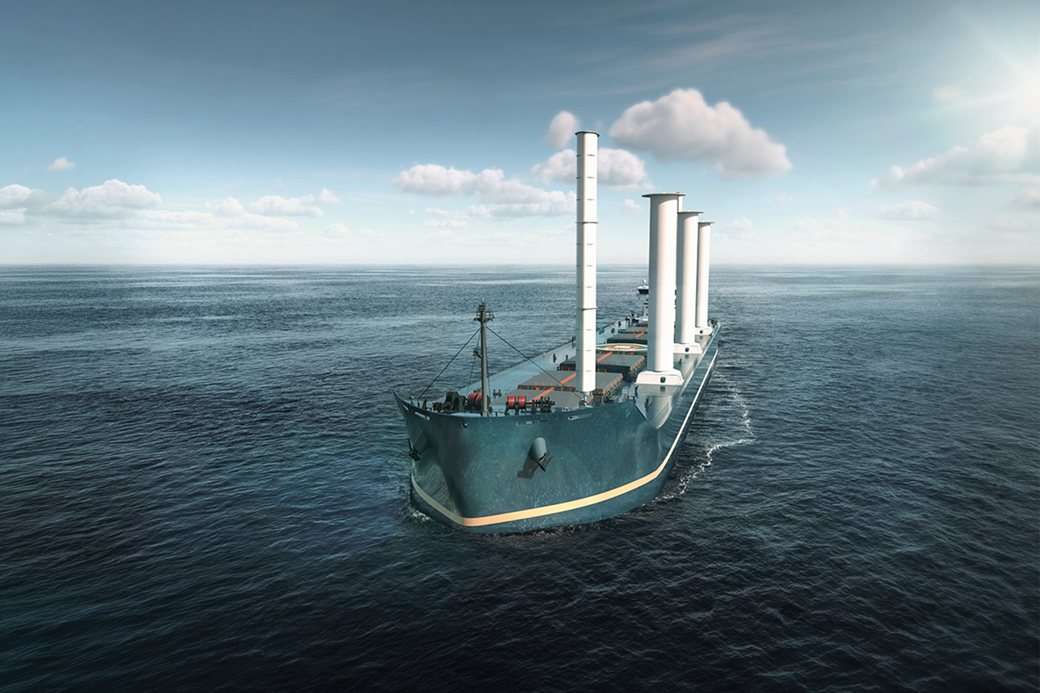
We have been working through what that means for real vessel designs, and the answers are reshaping how our customers look at efficiency investment. A recent Kongsberg Maritime analysis of a superefficient Kamsarmax bulker shows the scale of the change that is taking place. The design combines hull optimisation, a carefully matched propulsion package and integrated energy management with wind assistance on long open-sea routes, and delivers fuel savings of more than 40 per cent against a conventional Kamsarmax on a comparable trade, and over half on the most wind-favourable routes.
Historically, those fuel savings would have been the headline, and the business case would have stood or fallen entirely on technology payback periods. Today, the fuel savings are only about half the value captured. The rest comes from the ETS allowances the saved tonnage no longer has to cover and from a positive position under FuelEU pooling, which turns the vessel from a compliance liability into a source of pooling value for the rest of the fleet.

Oskar Levander,
VP Strategy & Business Development
This is a big shift for the industry. A project that looked marginal under a fuel-cost-only model can look compelling once compliance savings and pooling value are included. We are increasingly asked not only what a retrofit or newbuild will save on fuel, but what position it will create under EU ETS and FuelEU, and what premium it might unlock in charter negotiations and green finance conversations. 
This is also where the money for the wider transition starts to come from. Small optimisations, compounded across a vessel and proven with verified data, free up capital that can help fund the switch to new fuels when the time comes. Efficiency is the one decarbonisation lever that pays out whatever fuel eventually wins: a vessel that needs less energy will be cheaper to run on methanol, ammonia, bio-LNG or anything else, and cheaper to comply with any mechanism that prices the carbon content of what it consumes.
Got questions?
To see the full Kamsarmax study, or to discuss what efficiency looks like for your fleet, get in touch with our team.

Explore ON Decarbonisation
Discover expert insights, industry discussions and practical pathways to maritime decarbonisation.