Kongsberg Maritime’s experts are using the latest digital technology and data to improve efficiency and cut emissions on a fleet of platforms in the North Sea.
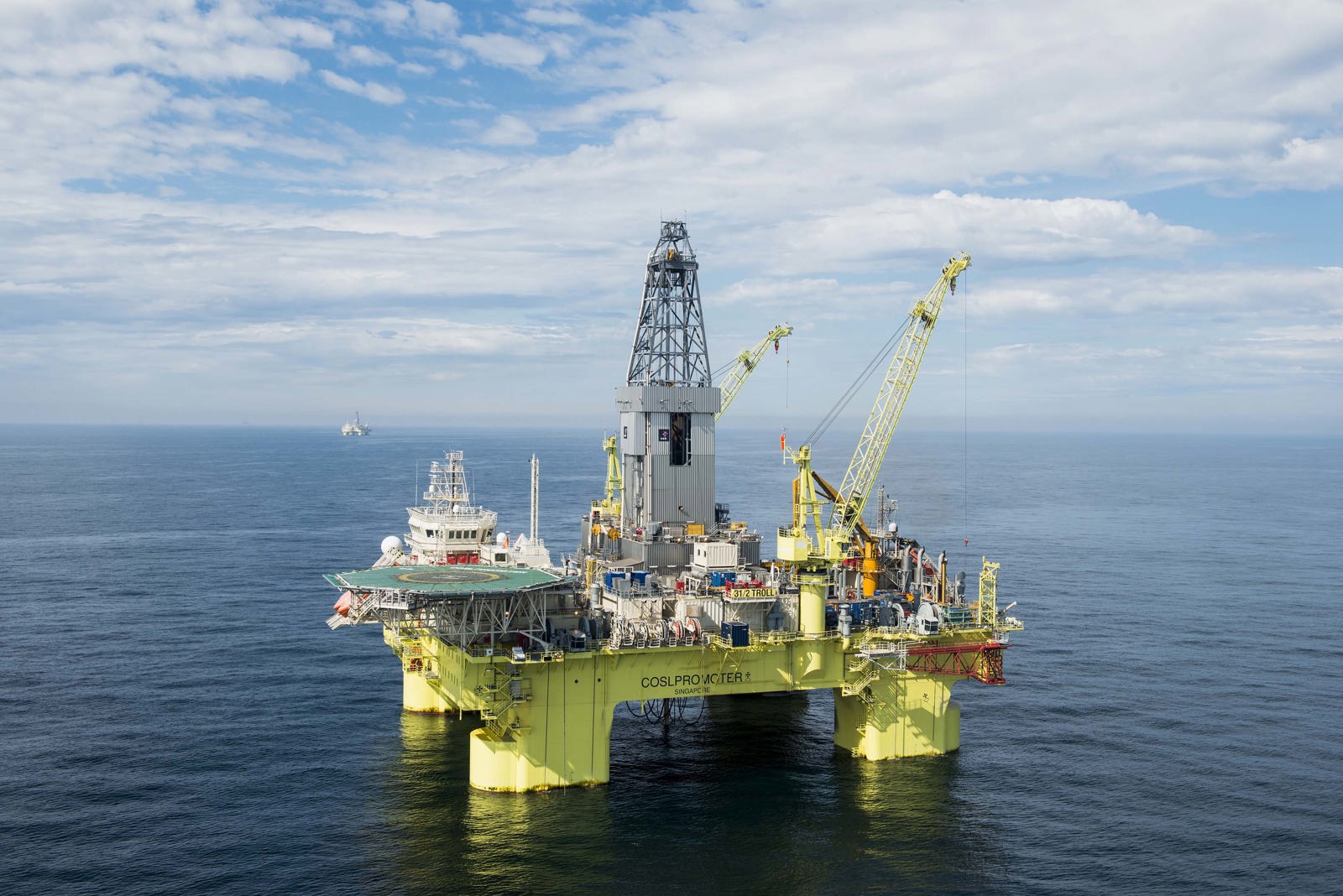
COSL Drilling Europe operates a fleet of advanced, harsh-environment semi-submersible rigs in the North Sea. In a market where safety, uptime and cost efficiency are paramount, the company has been on a continuous journey to simplify operations, improve performance and meet, or exceed, client expectations.
At the heart of that journey is a clear strategic direction: using digitalisation and data to enable smarter, leaner and more sustainable operations.
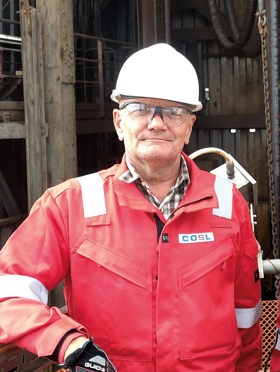
“First and foremost, digitalisation is about working safer and smarter,” says COSL’s CEO Frank Tollefsen. “It’s about understanding the rig’s condition, using data to make better decisions and ultimately focusing on more efficient operations, doing no more and no less than what is required.”
Key to COSL’s transformation has been the collaboration with Kongsberg Maritime, centred on an advanced energy control system.
This shift has seen COSL move towards condition-based operations across its fleet. The result is a simpler, more efficient operating model, built on data.
Historically, offshore rigs operate with significant built-in redundancy. “We once believed we needed all six gensets running 24/7,” Frank explains. “Even basic maintenance was challenging because we thought we had no margin.”
By combining operational data with Kongsberg Maritime’s advanced power management technology, COSL fundamentally changed its approach to energy.
“The principle is simple: only generate the energy you actually consume at any given time.” This ‘energy balance’ approach has transformed operations. “Operators today are all looking for low-emission solutions and suddenly we had a clear answer to that demand,” he adds.
Delivering higher standards
Frank continues: “Kongsberg Maritime has been a key partner from the design stage of our rigs and throughout this journey. Their technology, particularly in power management, combined with our operational experience, has enabled us to develop what is now one of the most advanced systems of its kind.
“The result is a step-change in capability. We have effectively created a leading solution for low-emission operations.”
Torfinn Kalstø, former ICT/OT & Energy Management Lead, COSL Drilling Europe, adds:
“Insights from the high-integrity data meant that we could challenge long-held assumptions within the industry. Nobody truly knew how much energy a rig was consuming during operations. We soon found that we were utilising less than 10 per cent of the actual available energy on board the rig, so there was huge room for improvement.”
“We changed our total energy management system,” Torfinn explains, enabling a shift from theoretical limits to data-backed operation. “Today, we can perform the same operations with as little as one genset, when previously we ran six, and still deliver full performance.”
One key outcome of COSL’s digital transformation is that efficiency gains have not come at the expense of performance. “There is no trade-off. We have maintained, and in some cases improved, our drilling performance,” Torfinn adds. “Because we measure everything, we have far greater control and can fine-tune operations continuously.”
Tangible results at scale
COSL has reduced fuel consumption and emissions dramatically across its North Sea fleet, with documented reductions of more than 50 per cent compared to earlier operations. “We have accumulated fuel savings of around 70 million litres of diesel across our rigs,” Frank states. “That is based on real, measured data, not estimates. In fuel cost alone, we are saving around $30,000 per day per rig compared to traditional operations. On top of that come the reductions in CO2 and NOx emissions.”
In many operating modes, rigs now run with a fraction of the power they once required. Where six generators were once standard, operations can now be maintained with two, or even one in certain conditions. This optimisation extends beyond power generation to other critical systems, most notably thrusters.
“We are now running our thrusters around 80 per cent less than before,” Frank explains. “Previously, they were operating continuously. Now we use only what is needed, scaling up from zero to full capacity when required.”
Facts and figures
Accumulated savings (COSL’s own reduction) from implementing the COSL Energy Control System compared with 2019 baseline are as follows:
An exciting digital future
The lessons learned are already influencing how COSL thinks about future rig design.
“If we were designing these rigs today, we would likely install only half the generating capacity,” says Frank. “With the right infrastructure, these rigs could even move towards fully electric or near-zero emission solutions. This technology is a stepping stone towards that future.”
Frank concludes: “When we started, even we were cautious about the potential. It almost seemed too good to be true. But once we had the data, and could see exactly how energy was being used, it changed everything.”
The key breakthrough was the ability to map energy consumption in detail, enabled by thousands of data points across each rig. “For the first time, we truly understood where energy was going at any moment. That was the proof point and it unlocked the savings.”
Frank adds that the message to the wider industry is clear: “Those who fail to fully leverage their data risk missing significant opportunities.”