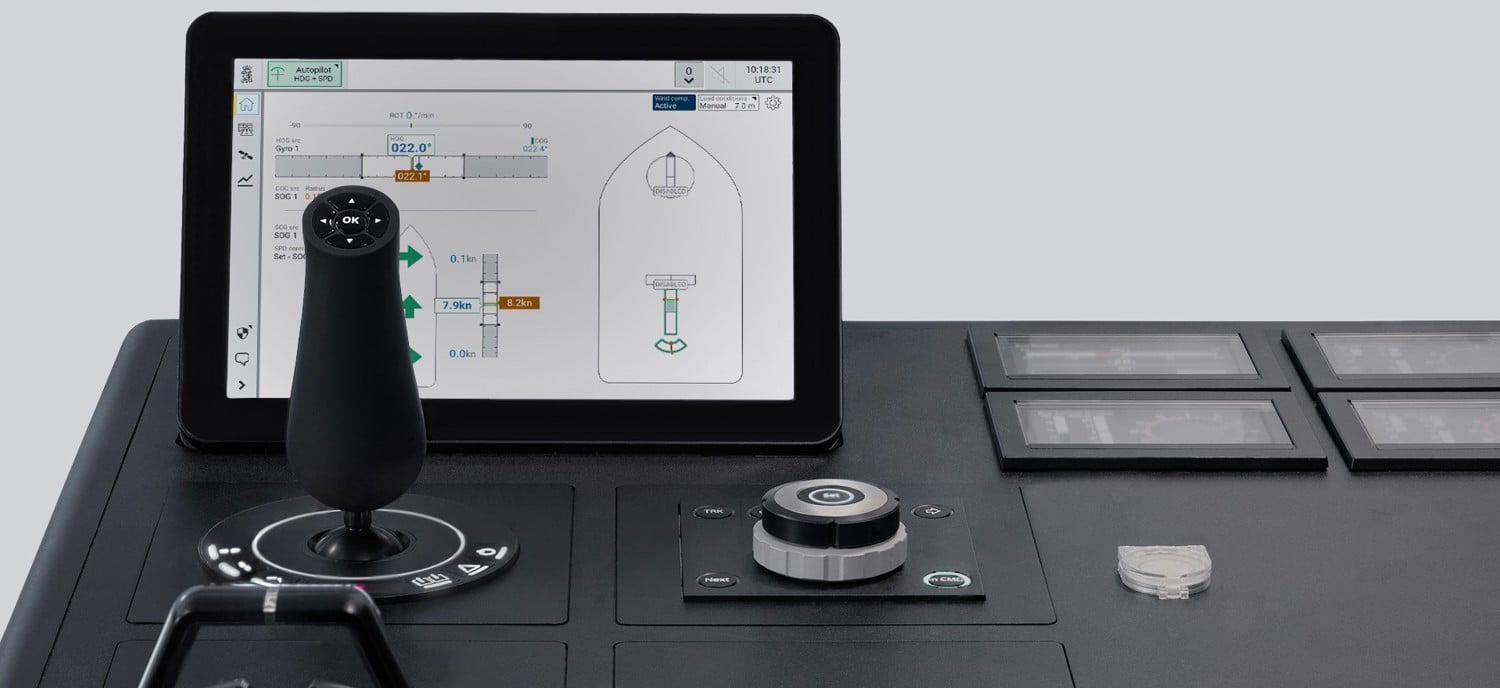
Advanced manoeuvring and vessel control
From transit to precise vessel control
Different phases of operation place different demands on the vessel, its systems and the operator. The principle is simple: match the control approach to what the vessel needs to do.
-
Reliable navigation and heading control to stay perfectly on course.
Transit -
Direct, hands-on control over movement and speed as operating space reduces.
Approach and manoeuvring -
Increased reliance on thrusters and propulsion for precise steering.
Low-speed operations -
Dynamic positioning to automatically lock in exact location and heading.
Positioning
Control designed around the operation
There is no single control approach for every vessel or every phase of operation. The right combination depends on the vessel, its operating profile, propulsion and thruster configuration, manoeuvring requirements, control positions and required level of integration.
|
1. Match the task |
2. Connect the vessel |
3. Support the operator |
|
Apply the appropriate control capability as operational demands change. |
Bring navigation, manoeuvring, propulsion and positioning into the wider vessel-control environment. |
Give operators access to the information and controls needed for the operation. |