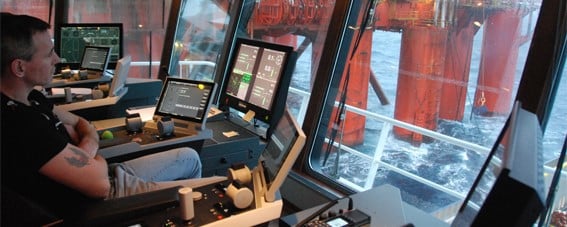
K-Safe safety system
What the system enables
K-Safe is designed to support:
-
Monitor safety-critical conditions and provide operators with relevant information about developing situations.
Safety monitoring -
Support predefined automatic, semi-automatic and manual actions when hazardous conditions are detected.
Hazard response -
Bring sensor information, alarms, actions, safety information and relevant CCTV information together to support operator response.
Situational awareness -
Use redundant system architecture, diagnostics and self-monitoring to support the availability and integrity required of safety-critical functions.
System availability
Fire and gas detection and protection
K-Safe F&G supports the detection and control of fire, gas and related safety conditions. The system can monitor smoke, heat, flame, gas and manual call points and interface with related safety equipment such as fire dampers, watertight doors and HVAC systems.
Emergency shutdown
K-Safe ESD supports emergency shutdown functions designed to limit the consequences of hazardous situations. Depending on the configured application, these can include process isolation and segmentation, blowdown and electrical isolation.
Process shutdown
K-Safe PSD monitors process conditions and can initiate shutdown of process equipment or segments when defined limits are reached. Applications can include protection of pumps and motors based on conditions such as pressure, level and temperature.
Safety management and control
K-Safe can bring safety information and response functions together in a common operator environment. The system can combine monitoring, alarms and information from safety-related systems to give operators a clearer overview of an active situation.
Operator support and situational awareness
When an event occurs, operators need to understand what is happening, where it is happening and what actions are available.
The K-Safe Situation Panel is designed to present relevant information and choices based on the active situation. This can include:
- details of the situation
- active sensors
- status of predefined automatic actions
- available semi-automatic and manual actions
- relevant CCTV information
For example, detection of a fire can make relevant CCTV information available to the operator and present the appropriate firefighting actions for the affected area.
Safety architecture, compliance and certification
K-Safe uses redundant system architecture and monitoring to support safety-critical applications. Depending on the system configuration, redundancy can include controllers, servers, communication and power.
Both the K-Safe hardware and the software hold type-approval certificates from major classification societies and SIL-certification by TÜV.
Discuss your safety system requirements
The appropriate K-Safe configuration depends on your vessel or installation, required safety functions, system interfaces and safety integrity requirements.'
Talk to us about your K-Safe system configuration