Where support builds trust
As a field engineer, Matheus steps into situations where technology, people and operations meet in real time.
Understanding the bigger picture
When Matheus goes to work, little is predictable. One day he may be reading up on a case and preparing for a trip. The next, he is on board a vessel, in the middle of a live operation, meeting a crew for the first time and stepping straight into a situation that needs to be solved. That is exactly what he likes about the job. As a field engineer, he works where technology stops being theory and starts being reality.
He joined us in 2022 and works as a field engineer within dynamic positioning - a role that puts him close to both the technology and the operational realities on board.
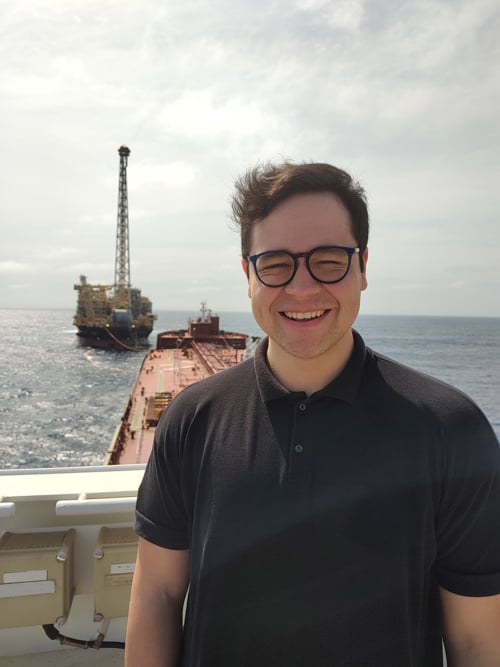
With experience, the role has become broader and more interconnected. Over time, he has gone from focusing on one product to understanding more of how systems across the vessel work together in practice. That matters on board, because the issue he is called in to solve is not always confined to one system. He points to systems such as K-Chief, K-Bridge and K-Master as part of that bigger picture - a reminder that when something happens on board, different functions often have to be understood together.
That becomes especially clear when he is sent on board to support vessels during startup or other critical operations. In those situations, the issue is rarely isolated. A fault in one area can affect the wider operation, and expectations are high from the moment he arrives. “We always have commercial pressure on board to deliver the vessel as soon as possible,” Matheus says. In some cases, the customer may expect a solution in minutes. “And it’s not always like that,” he says. When the situation is more complex, delivering quality can take time.
That is part of what makes adaptability so important in the role. For Matheus, it is not only about staying calm when things change, but also about being willing to step into the situation and learn from it directly. “I like to go, I like to see the situation on board and try to adapt to the situation,” he says. He also believes this varies from person to person - but in a role like field engineering, where no two situations are exactly alike, that kind of curiosity, flexibility and willingness to step into the unknown matter a great deal.
More than technology
For Matheus, what makes us strong goes beyond the products alone.
“Kongsberg Maritime stands today as a leading company globally, not only because of the technology itself,” he says, “but because of the huge customer support infrastructure that we have behind it and how we deliver support.”
For him, that is a big part of what sets us apart. It also explains why communication matters so much in the role. In critical situations, the field engineer has to do more than troubleshoot. He has to explain, reassure and create confidence in what happens next.
“Conversation and communication with the company, the customer and the crew can completely change the scenario,” Matheus says.
That is also why he finds the role so meaningful. “The customer may never meet the engineers behind the software or the teams developing the products. But they will remember the field engineer that was on board to help them during a critical situation,” Matheus says. “You are the face of Kongsberg Maritime at that moment.”
He also loves the human side of the job. Going on board means stepping into new environments all the time: new vessels, new crews, new cultures and new ways of working. “You’ll be with a different range of people and crew on board, different cultures, different people from different continents,” he says. “So you need to adapt to all of these different types of people. And it’s really amazing. I love that.”
Over time, those encounters have turned into one of the most rewarding parts of his working life. He talks about building real relationships on board and about staying in touch with officers, captains, chief mates and chief engineers he has met through the job. For him, being close to the operation also means being close to people - learning about their background, their reality and what matters to them.
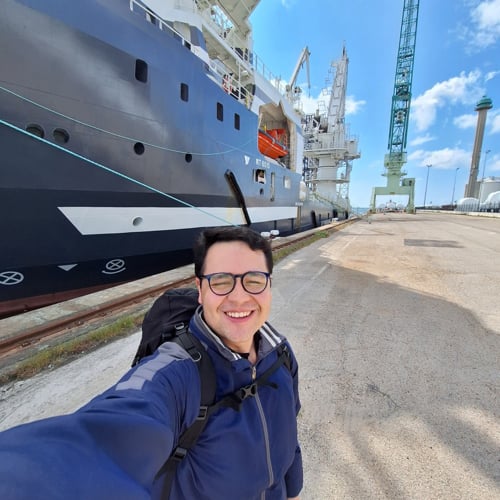
And in the end, that is what matters most to him: knowing he has helped. The best moment is when the work is done, the customer is satisfied and the trust is there. “I believe the best part is when you are signing the technical report and the customer is really satisfied,” he says. “You have created a relationship of trust with the customer.” That, for Matheus, is what life as a field engineer is really about.