Electrical engineering with real-world impact
Sigurd and Eirik work with some of our most complex electrical questions - while helping others learn, improve and make systems safer in practice.
For both Sigurd and Eirik, electrical engineering is not just about calculations on a screen. It is about understanding what happens when something fails, what keeps a system stable, and what has to work when the stakes are high.
Meet Sigurd and Eirik
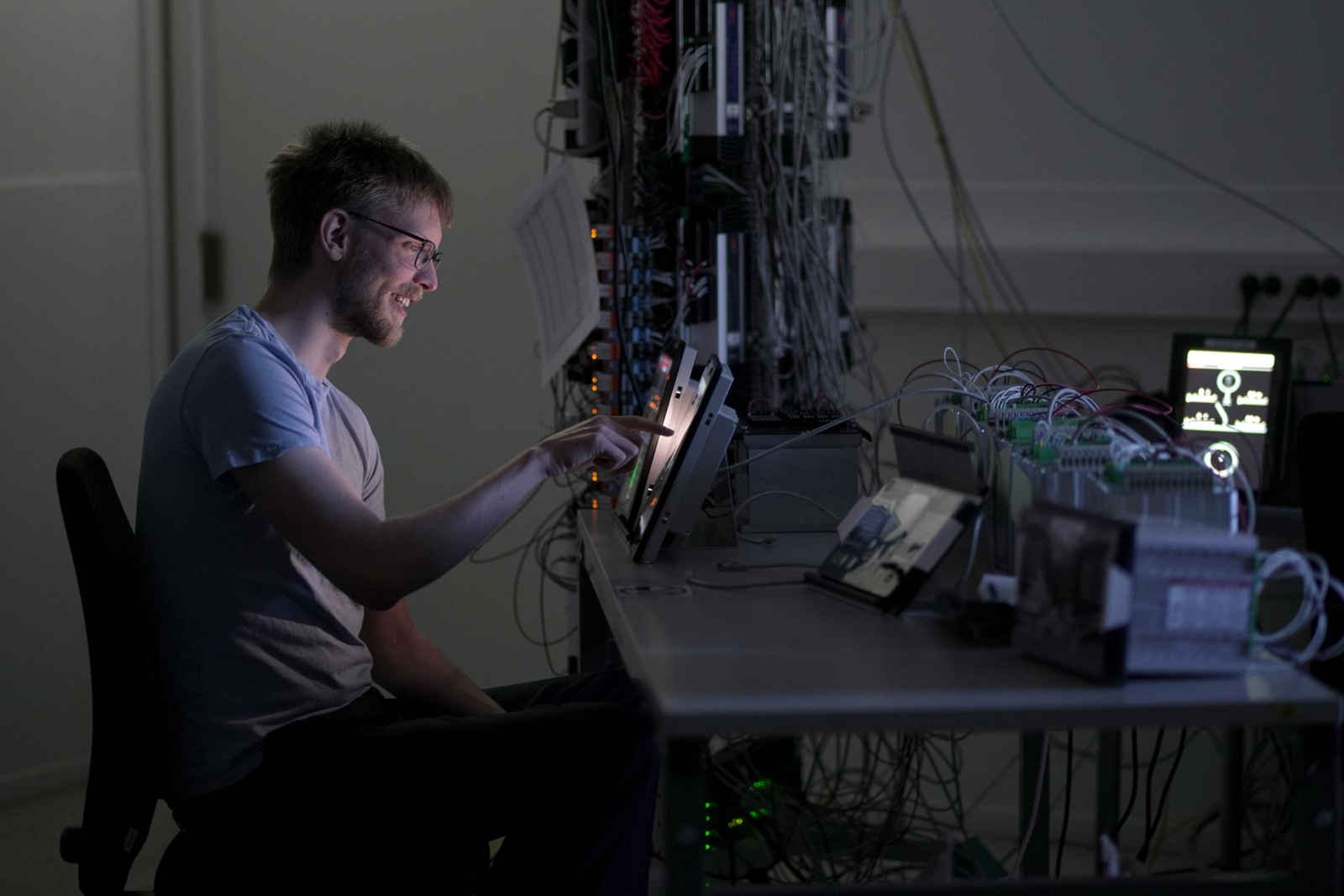
Sigurd came into Kongsberg Maritime through the industrial master’s route. After taking a bachelor’s in electrical engineering in Kongsberg with a cybernetics direction, he chose Systems Engineering because he wanted something broader – with more product development, project work and a different way of thinking about engineering.

Eirik, who joined Kongsberg Maritime in 2018 after studying Advanced Electrical Power Engineering in Scotland, was Sigurd’s mentor when he started. He initially worked with electrical studies using tools like ETAP (Electrical Transient Analyzer Program), and over time moved more into programming and tool development. He also values his role as a mentor: “I like teaching people and helping them get to a point where they feel more comfortable in what they’re doing.”

Sigurd still remembers his first impression of the work. He was placed next to two people working with the same kind of studies – one of them was Eirik – and his reaction was immediate: “I understood nothing.” In fact, he remembers thinking: “This is definitely not something I want to work with.” But he tried it anyway. And somewhere along the way, that confusion turned into enthusiasm. What had looked “completely terrible” at first became exactly the kind of work he wanted to keep doing.
Complex questions, practical consequences
At its core, electrical engineering is about understanding how systems behave and making sure designs meet technical requirements before something goes wrong in practice.
One part of the work is protection and coordination studies. The technical language can be advanced, but the basic logic is straightforward: if something fails, the right protection needs to respond in the right place. Sigurd explains it with a comparison that is easy to picture. If something goes wrong in a socket at home, you want the fuse for that circuit to trip-not the main fuse for the whole house. On a vessel, the same principle applies, but the systems are far larger and more complex, and the consequences are more critical. That is why the details matter so much.
Another part of the role involves studying what happens dynamically when the system is disturbed. That can include transient studies, short-circuit calculations, redundancy assessments and other analyses that test whether a vessel remains stable when faults occur. As Sigurd puts it, “this is particularly critical for vessels with Dynamic Positioning (DP) notations, where any loss of position-keeping can have serious safety and cost implications.” These are not abstract questions. They are exactly the kinds of scenarios the studies are meant to answer before a problem happens in practice.
Much of that work ends up in reports and technical documentation. For them, though, documentation is not just paperwork. It is part of proving that a design meets requirements and making the technical reasoning visible to others. But the role also becomes broader over time. Sigurd describes how the job now includes not only studies and reports, but also technical input, troubleshooting, simulations of real events and discussions about possible solutions.


The Electrical environment
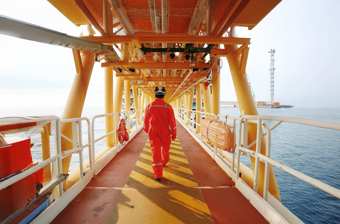
Kongsberg Maritime develops and delivers technology for a wide range of vessel segments – from offshore and subsea operations to cargo, passenger, naval and specialised vessels.
That breadth is something both Sigurd and Eirik notice quickly. As Sigurd puts it, you can end up working on everything from “small, but important” vessels to large and complex installations connected to oil and gas production.
The systems are rarely standalone. Electrical solutions are part of larger, integrated deliveries where power, control, automation and propulsion all need to work together. That is also what shapes the kind of challenges engineers work on – making sure the system holds together, even when something goes wrong.
Eirik describes it as the kind of work where you can keep digging deeper: understanding how systems behave, testing scenarios before they happen in real life, and gradually seeing how everything connects.
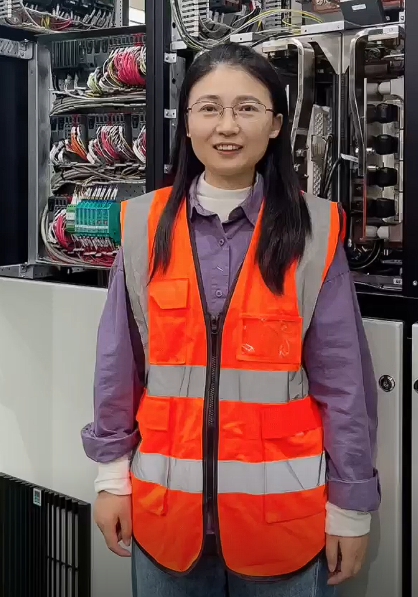
Laura, an electrical engineer based in China, adds another perspective to that environment. In her role, the work is closely tied to delivery in practice – from following product design and development against specifications to Factory Acceptance Testing (FAT) and commissioning.
Her perspective shows how broad the electrical environment at Kongsberg Maritime really is: it is not only about analysis and studies, but also about making sure systems work as intended in real projects, on real vessels, and in close collaboration with project managers, product teams, system teams, shipyards and owners.
She describes the environment as rigorous yet friendly, with a strong focus on safety, reliability, and quality. As Laura puts it, “Communicating face to face with different industry peers and solving practical on-site problems also makes my work meaningful and fulfilling.” For her, that hands-on collaboration is a big part of what makes the role rewarding.