Safe and smart tug operations
From training pilots to validating ship designs, Kongsberg Maritime’s K-Sim advanced simulation technology is transforming modern tug operations.
-
Craig TaylorSenior Manager PR & Communications
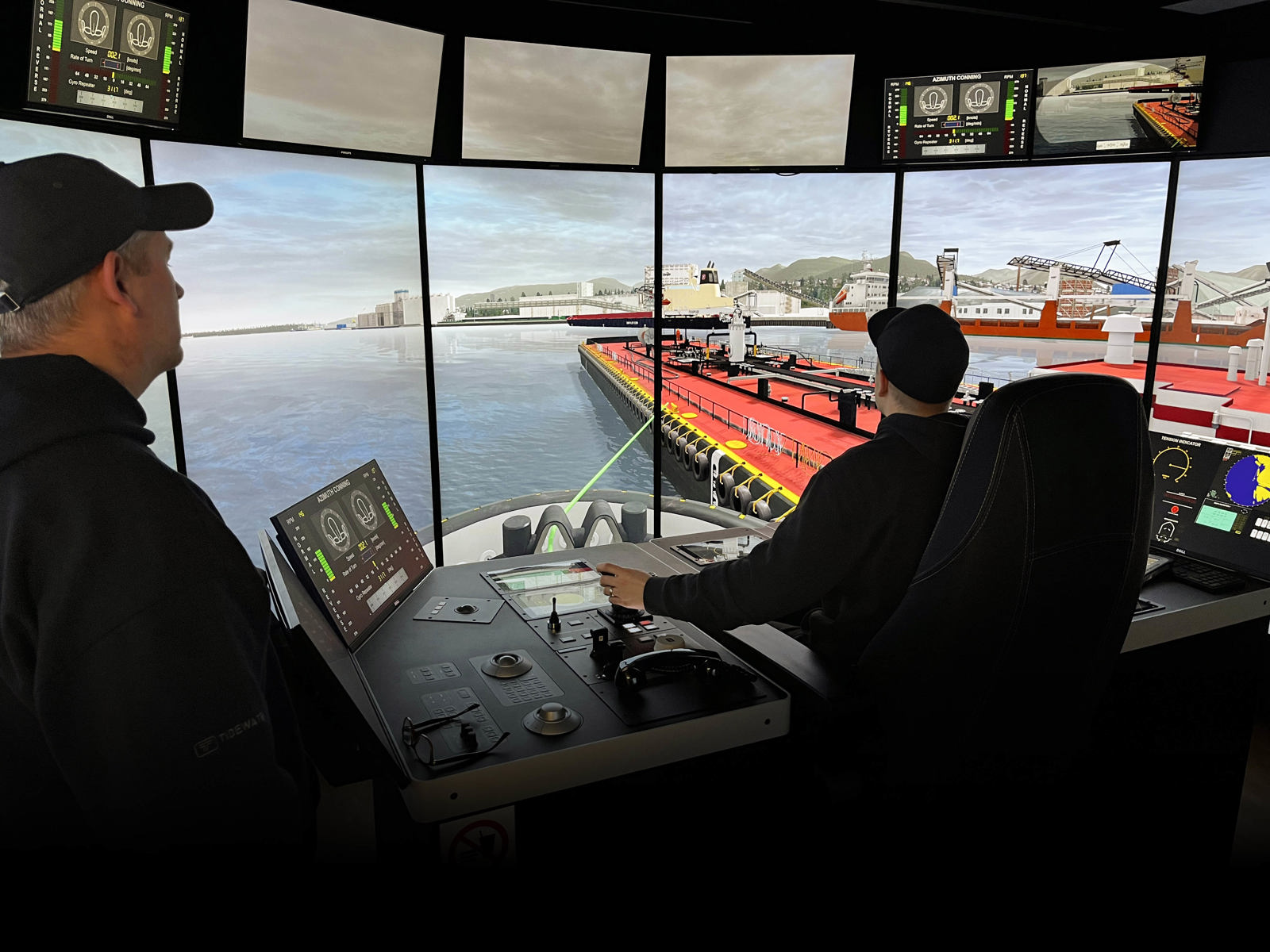
K-Sim replicates the tug’s physical wheelhouse
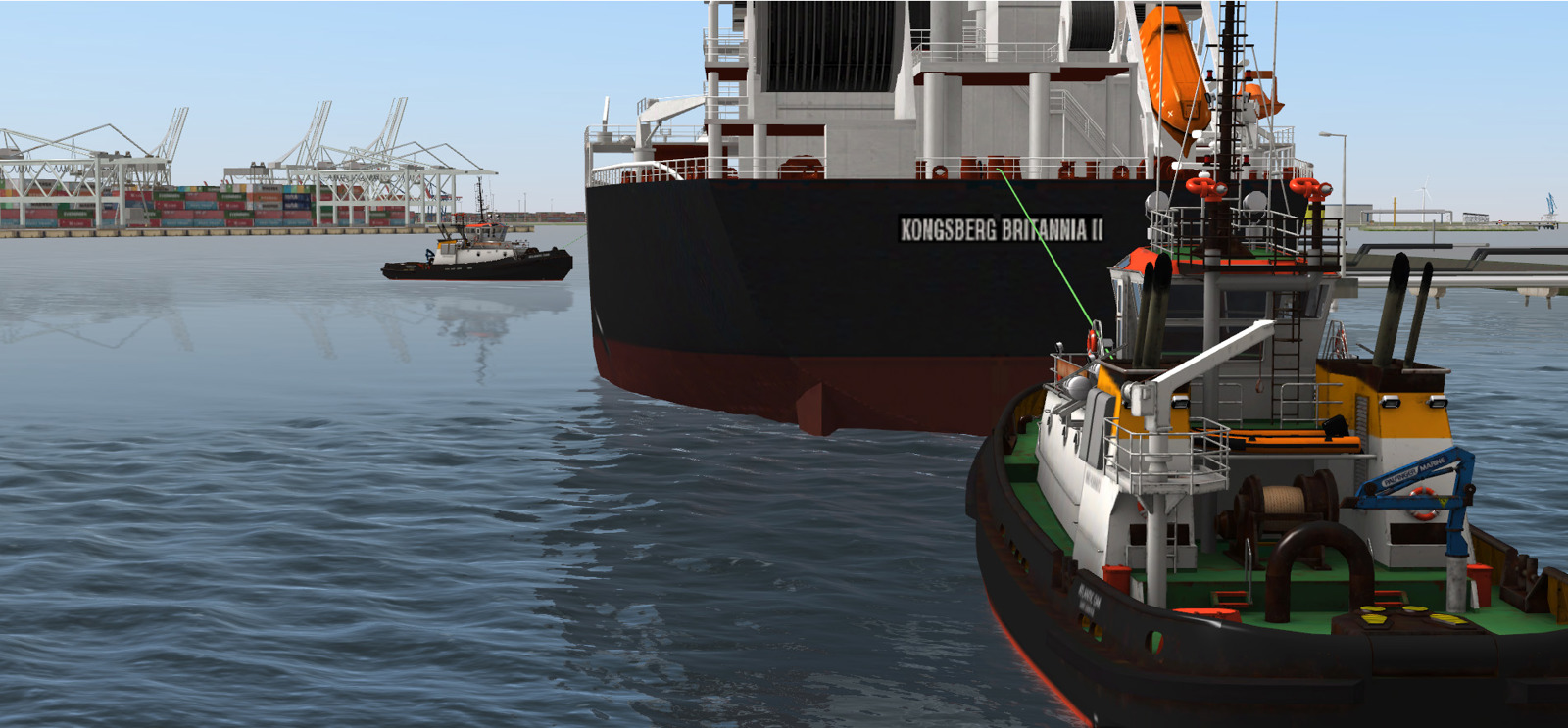
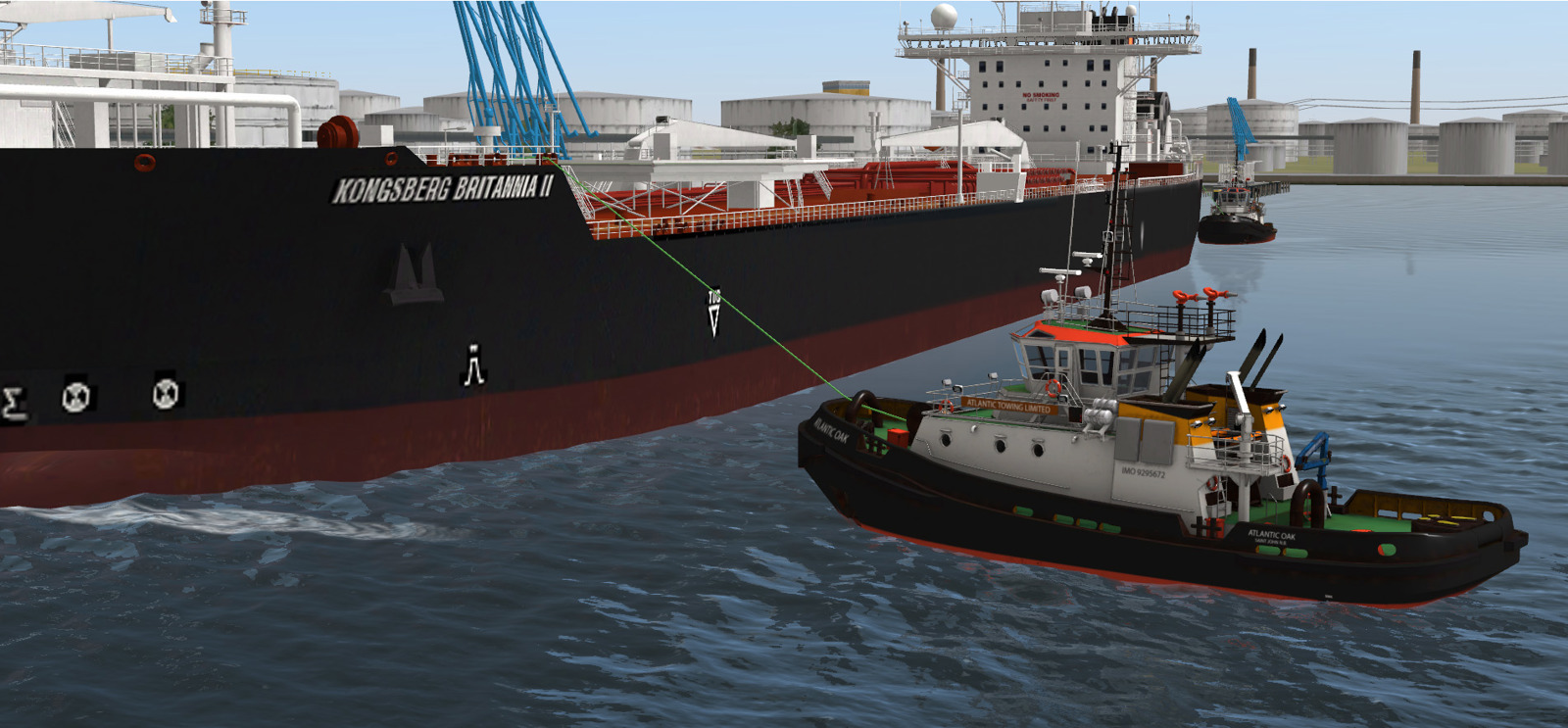
K-Sim allows operators to practice tug handling, such as escorting a large container vessel
“We can simulate tugboat responses in various environments and in many ways, including their performance limits and the practical life cycle of winches,” Garland explains. “Simulation also considers different ship designs and how this changes towage and pushing operations. There could be different forces on ships and tugs, and all of this is incorporated into proof of concept and training programmes.”
Simulators are also used for mooring analysis and practising ship-to-ship transfers, replicating forces on tugs and towlines in various sea states. This capability is vital for offshore oil loading and other high-risk operations.
The latest evolution in tug simulation is the integration of augmented reality (AR) and virtual reality (VR). These technologies deliver immersive experiences while reducing hardware requirements, making advanced training more accessible. “VR is okay for visual cues, but operators need tactile feel of controls and to monitor real instruments,” Garland continues. Full-mission simulators replicate the tug wheelhouse, while AR offers a cost-effective alternative for smaller setups. “In years to come, AR will be incorporated in proof of concept and training simulators.”